Postgres
plus a server
The whole stack is a Next.js app and a Postgres database. If you can run those two things, you can run Home Base.
The command center for serious service shops. Free to self-host, or $37 a month if you'd rather we host it.
Self-host
The full source for Home Base is on GitHub. Pull it, stand it up on a server the shop already trusts, and own the whole stack. The software is the same one running at $37 a month on our infrastructure.
Postgres
The whole stack is a Next.js app and a Postgres database. If you can run those two things, you can run Home Base.
GitHub
Every release, every issue, every planned change lives on GitHub at fruitmob/home-base. No gated download portal.
Source
The license is permissive by intent: run it, modify it, use it commercially, and keep running what you have even if we stop shipping.
Any
Your VPS, a friend's basement server, or the spare PC in the back office. The software does not care where it runs.
Same product
The same work-order and reporting surfaces are available when the shop runs Home Base on its own infrastructure.
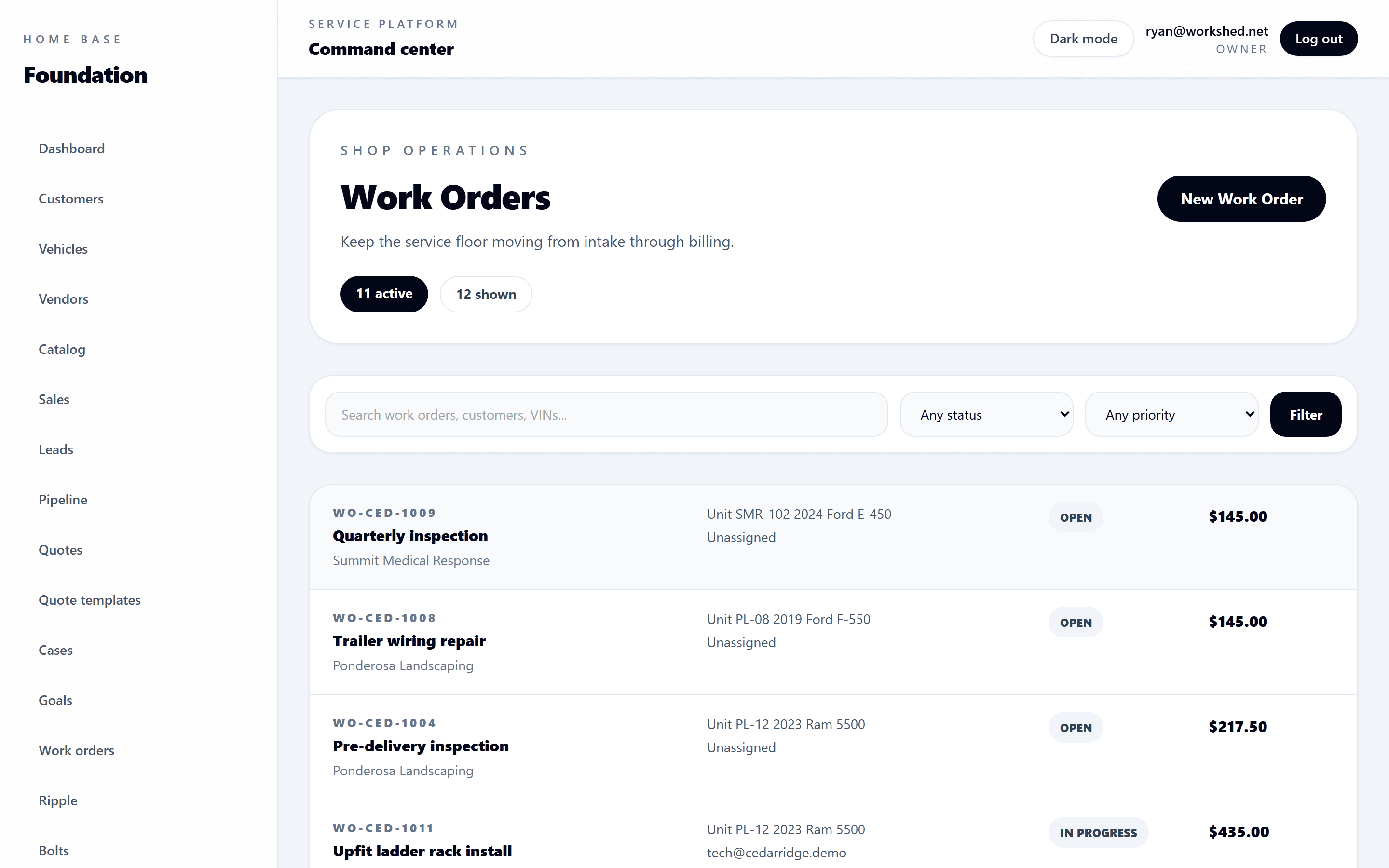
Same app
The self-host path is not a demo shell or reduced edition. It is the same shop workflow.
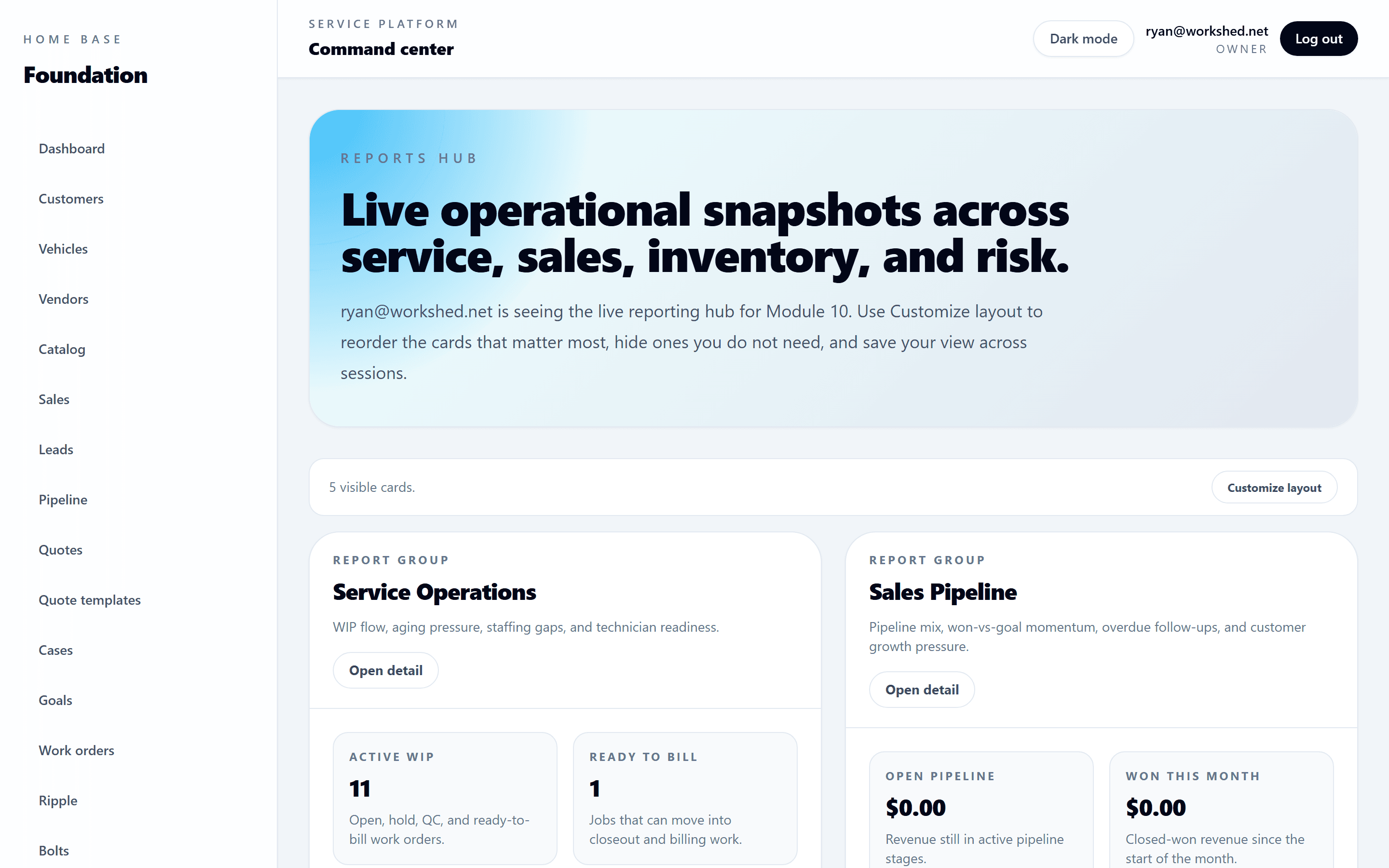
Same reporting
Running it yourself still means keeping the dashboards and reports that make the shop legible.
What you need
Home Base is designed to run on hardware a service shop already has access to. There is no proprietary runtime, no custom database, and no managed service the code depends on.
Any Linux box with 2GB of RAM and enough disk for the database. A cheap VPS does it. The existing shop server probably does it.
The repo ships both a straight-Node setup and a docker-compose file. Whichever is already familiar is the right one.
Customers hitting the portal from their phones need a real URL and an SSL certificate. For internal-only use, an internal hostname is fine.
Somebody has to apply updates and restart things if they break. That is the trade for paying zero.
The trade
The hosted plan exists so a shop can pay for someone else to run Postgres, patch a server, and answer the phone at 4pm on a Tuesday. If that is not what you need, the code is yours for nothing.
The GitHub repo has everything the hosted version runs on. No enterprise-only fork held back.
Self-hosting means you are the support team. The hosted plan is where Home Base picks that up.
Self-host FAQ
Self-hosting is a real commitment. These answers should make it clear what the shop is signing up for.
A few honest reasons. The database sits on hardware the shop already owns. The code can be customized for a workflow nobody else has. There is already a server in the corner running other shop tools. Or the shop just wants the freedom that comes with owning the stack end to end.
GitHub issues are public and answered on a best-effort basis. If the problem is urgent and a phone call is needed, that is the service the hosted plan provides.
Yes. The license is permissive: fork it, modify it, even ship a private variant inside an operating group. The only ask is that a fork not be presented as the official Home Base.
Same cadence, same code. What runs on the hosted infrastructure is what lives on GitHub. There is no enterprise-only branch.