Trust
is visible
Portal, Lens, and cleaner approvals are proof surfaces buyers can evaluate directly.
The command center for serious service shops. Free to self-host, or $37 a month if you'd rather we host it.
Proof
Home Base is new enough that we have not invented a wall of public case studies. This page lists the signals a shop should actually look for during the 14-day trial instead.
Trust
Portal, Lens, and cleaner approvals are proof surfaces buyers can evaluate directly.
Flow
The strongest proof in a pilot is whether one real workflow gets calmer, faster, and more coherent.
Visibility
Reporting becomes meaningful when it helps the team intervene sooner, not just read prettier numbers later.
No
Honesty matters here: the point is to define what should be validated instead of inventing customer stories that do not exist yet.
Proof surfaces
These are the screens a buyer can use during the trial to judge visibility, workflow continuity, and customer trust.
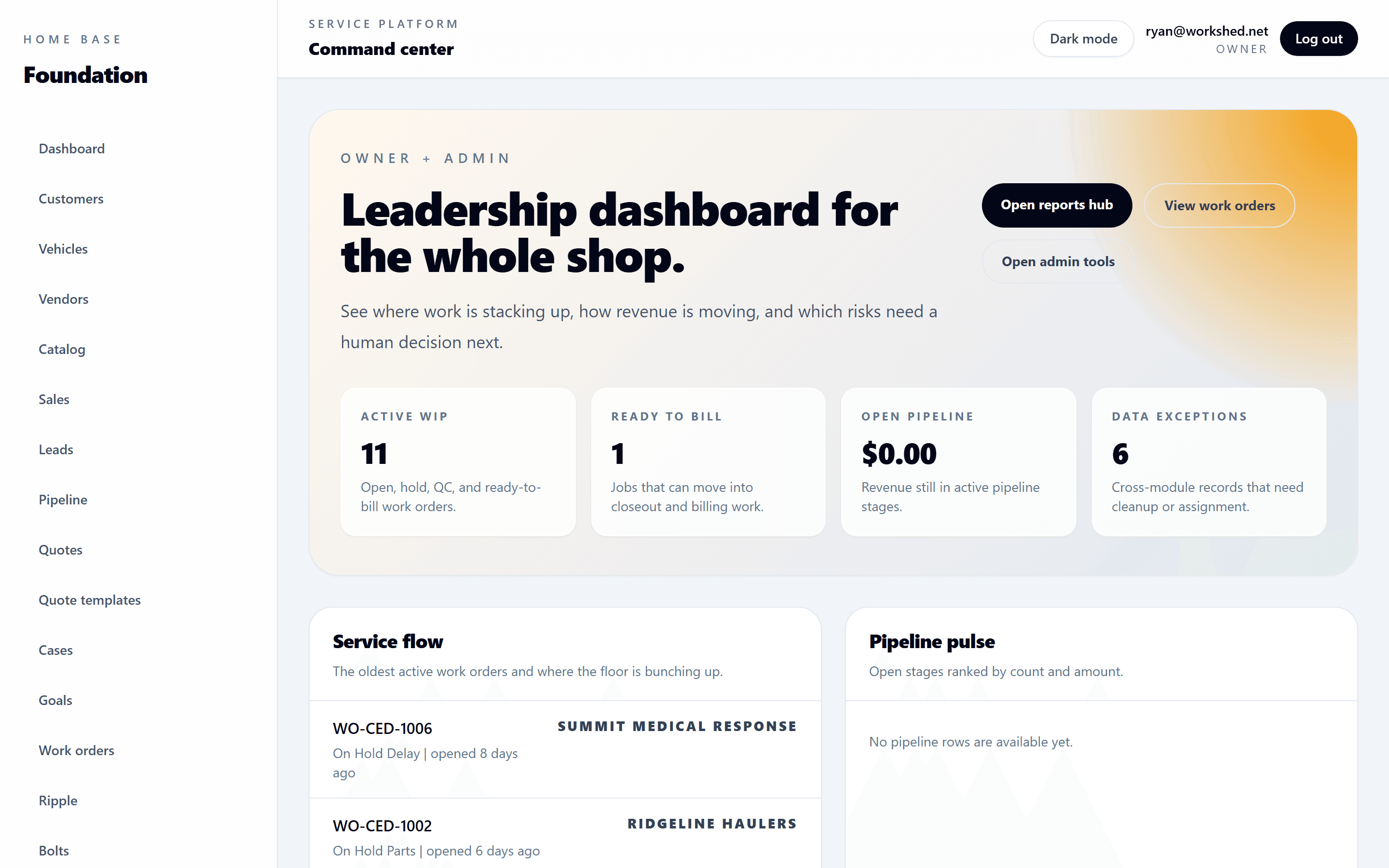
Visibility
The trial should make pressure easier to read before the day has already gotten away from the shop.
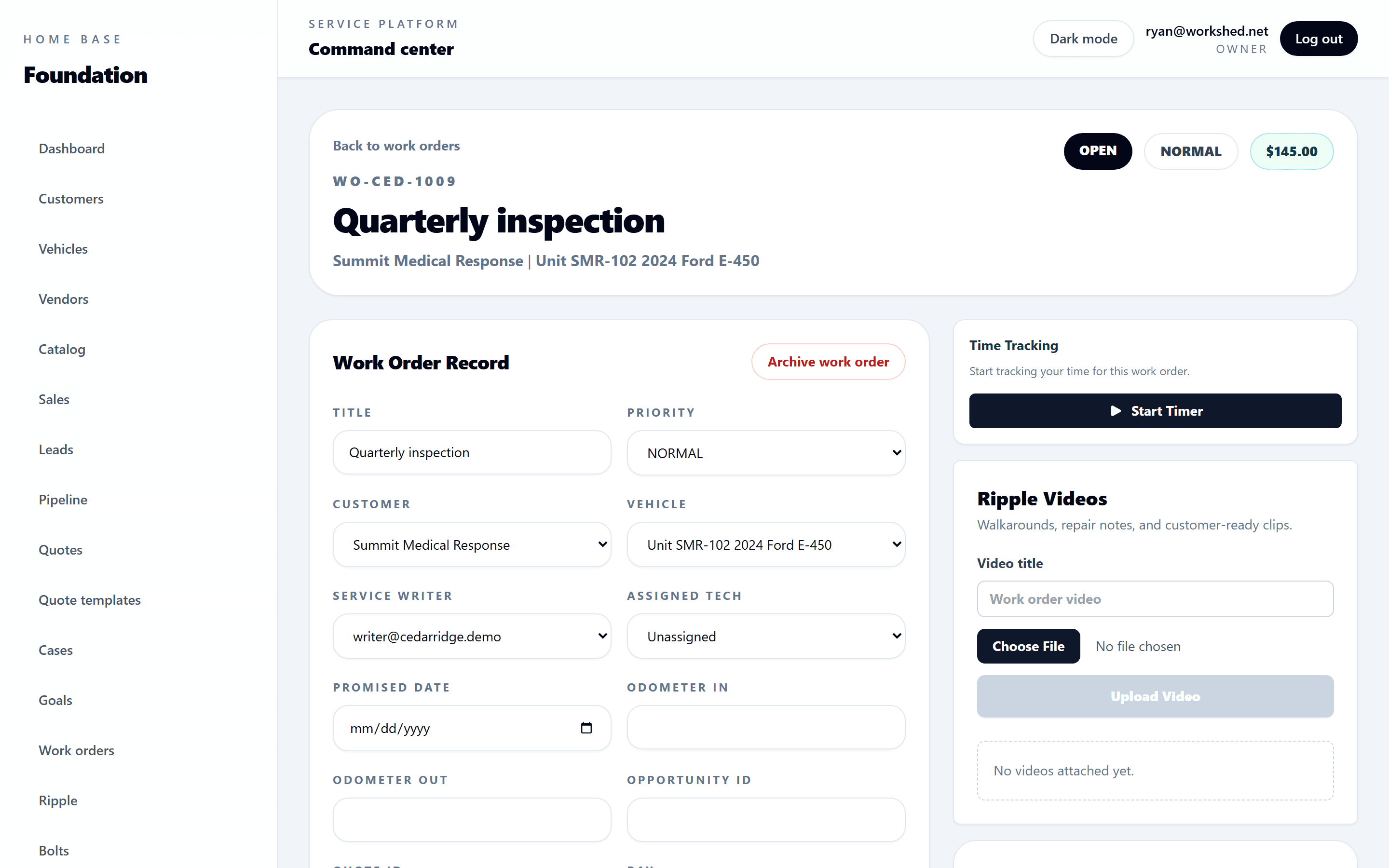
Workflow
Work order detail is where the shop can test whether context survives the real handoffs.
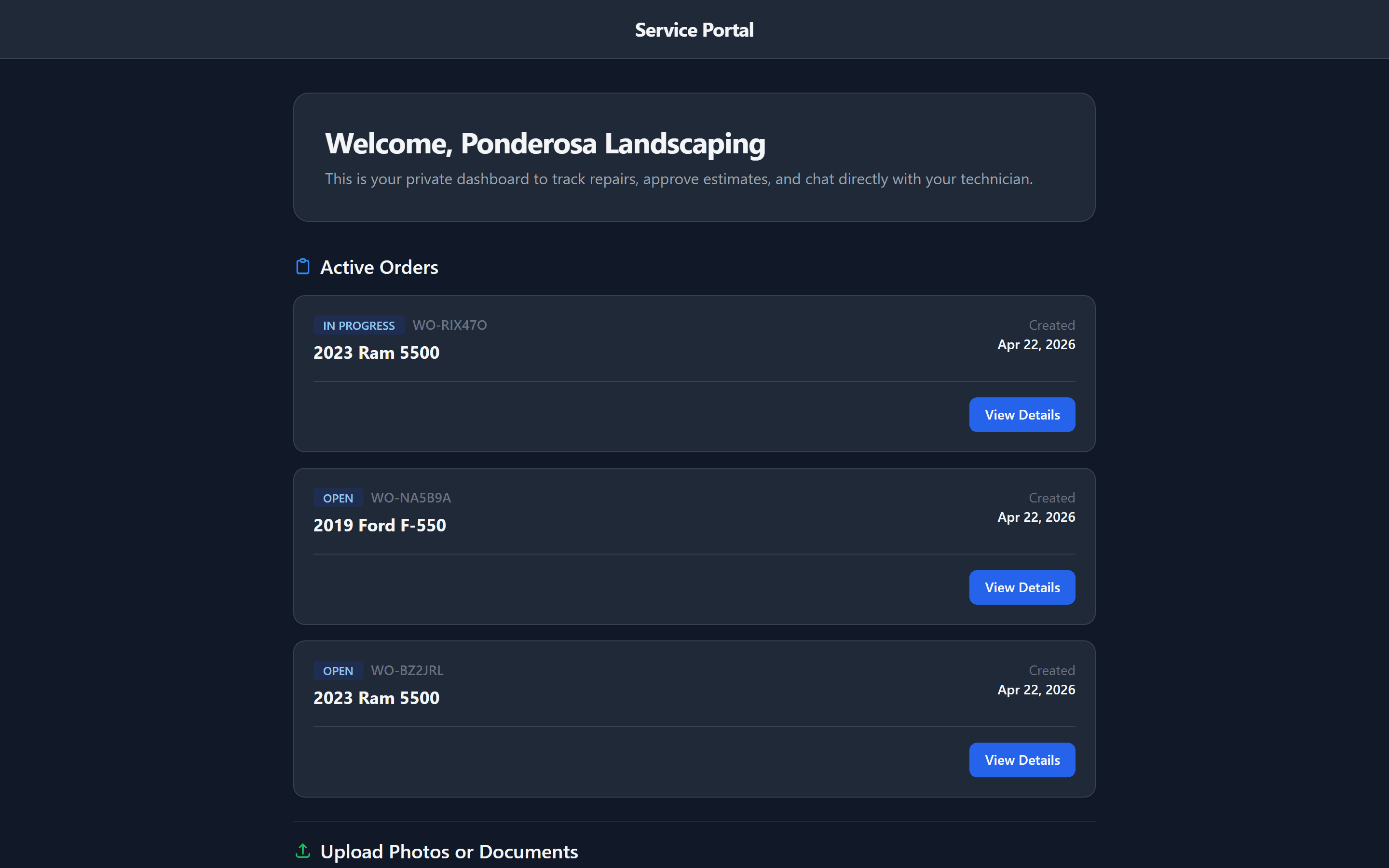
Trust
The portal is the most direct way to test whether communication feels calmer and more credible.
Proof surfaces
Home Base becomes more believable when buyers know what to test for: cleaner customer moments, calmer handoffs, earlier visibility, and a platform that feels coherent.
Proof starts with whether approvals, updates, messages, and explanations stop feeling scattered and reactive.
The platform earns trust when intake, work orders, proof, and reporting still feel connected by the end of the walkthrough or pilot.
A stronger operating system helps the team spot stalled work, queue buildup, and closeout risk before the day is already lost.
Role-aware screens, confirmation flows, and grounded data patterns matter because they make the system feel serious.
Validation mindset
The strongest evidence is whether one real workflow feels more organized, more trustable, and easier to act on.
A good proof page should tell buyers what to look for, not just what to admire.
The most convincing evidence is operational, not theatrical.
Scenario checks
What you validate first depends on where the pressure sits today: customer trust, shop flow, or management visibility.
The trust track should show whether clearer proof changes decision speed.
The operations track should show whether one job story can stay coherent across the day.
The visibility track should show whether the reporting layer changes timing, not just presentation.
Proof FAQ
Trust goes up when the proof stays specific and honest instead of theatrical.
Because Home Base is new enough that pretending to have a wall of finished public case studies would be dishonest. The better move is to tell shops exactly what to look for during the 14-day trial, then let the work speak for itself.
Whether the platform makes one real workflow feel calmer, more coherent, and easier to trust. That is stronger evidence than a long feature list.
By being specific about what a pilot or walkthrough should prove instead of leaning on vague claims or generic SaaS social proof patterns.