30-45
minute intro
Enough time to see one complete workflow and still keep the conversation specific to the shop.
The command center for serious service shops. Free to self-host, or $37 a month if you'd rather we host it.
Demo
Tell us where the shop feels stuck and who should be in the room. We will center the first conversation on that pressure point and show you whether Home Base is worth a 14-day trial.
30-45
Enough time to see one complete workflow and still keep the conversation specific to the shop.
3
Operations, customer trust, or visibility. We can start where the shop is actually feeling pain.
1
The intro works best when it follows one believable job from intake to customer approval to closeout.
0
The goal is clarity first. The 14-day trial starts when the shop is ready, not at the end of the call.
Walkthrough paths
Owner visibility and one real job story are two clean starting points for a focused first conversation.
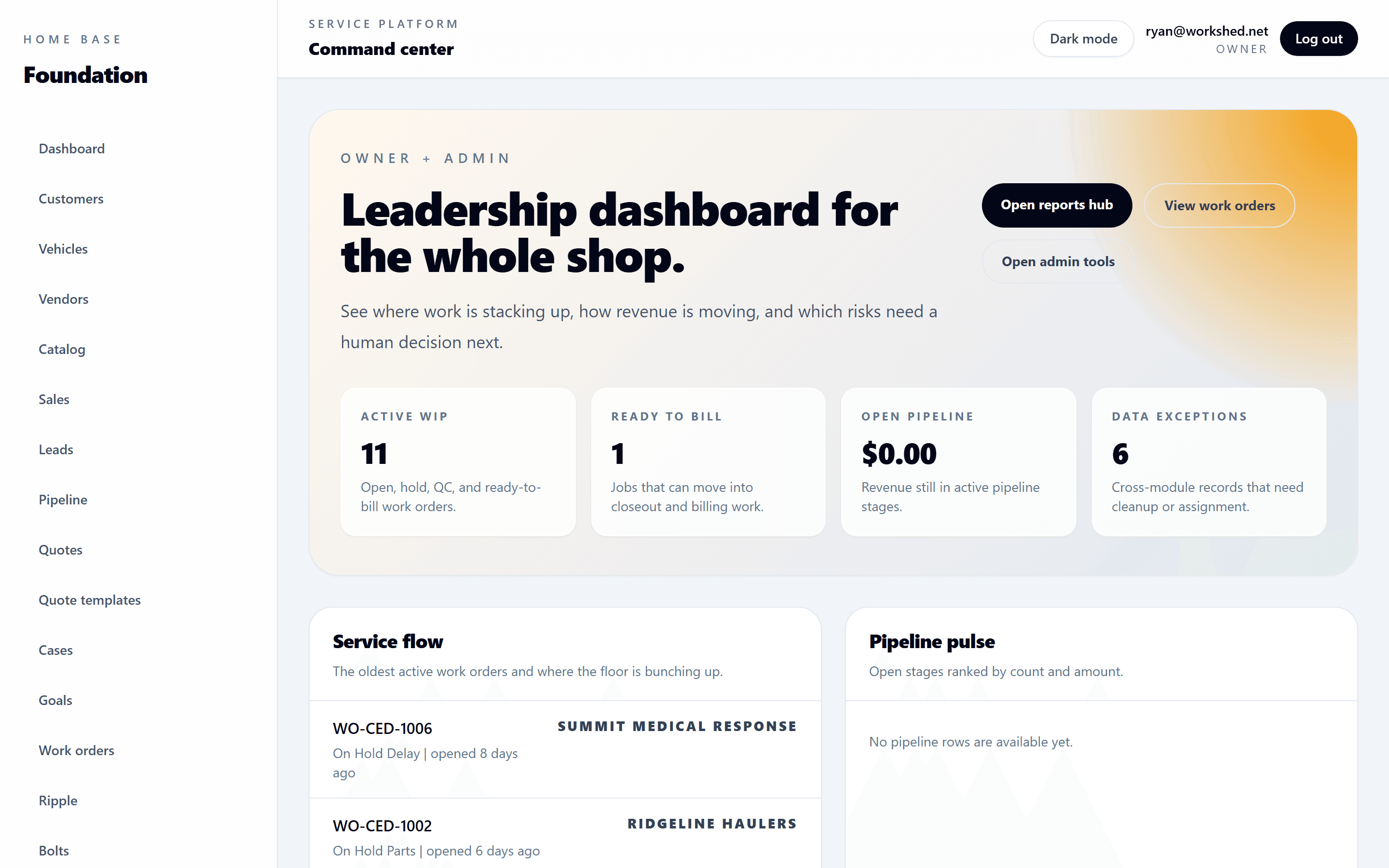
Owner path
For owners and managers, the first walkthrough can start from visibility and closeout pressure.
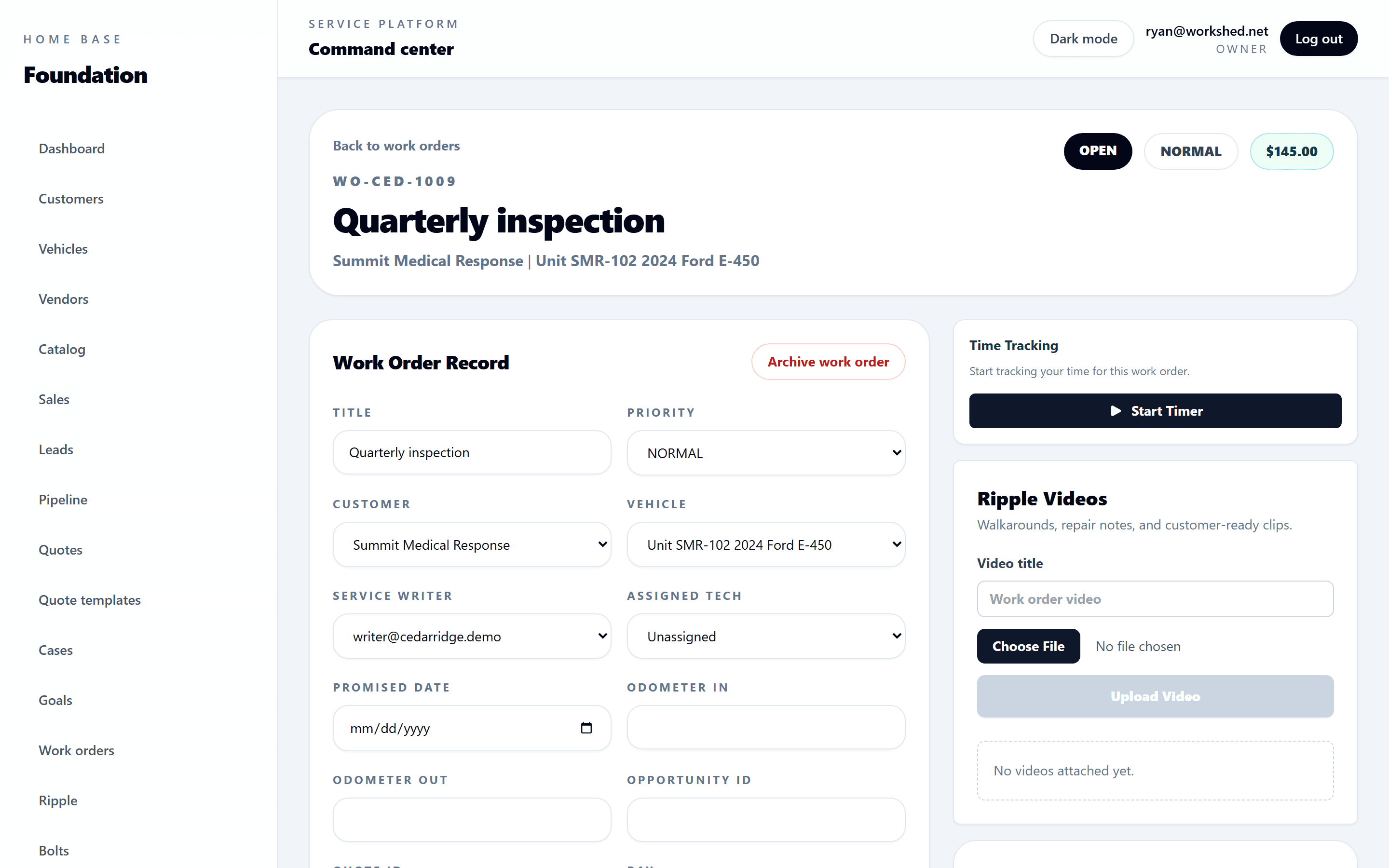
Service path
For service teams, the demo can follow one job through estimate, work order, approval, and closeout.
Start the conversation
The more concrete the pressure point, the more useful the first conversation will be.
Demo intent
The strongest intro is not the one that covers the most screens. It is the one that makes the current bottleneck feel solvable.
We walk from intake to work order to customer approval to reporting so the platform feels concrete, not theoretical.
We can focus the intro on customer communication, floor operations, reporting, or AI-assisted workflows.
Either the shop starts the 14-day hosted trial or walks away with a sharper read on fit. Both outcomes are useful.
What happens next
Once the request is in, we narrow the conversation around the right pressure points so the platform feels relevant fast.
01
Share the biggest workflow bottleneck, communication problem, or visibility gap the shop wants to solve first.
02
The first conversation centers the platform around the right lens so it feels specific instead of generic.
03
We show how Home Base carries a job from intake to proof to closeout instead of bouncing between disconnected screens.
04
The conversation ends with a clear read on fit. If it makes sense, the hosted trial starts right after. If it does not, we leave the shop with a candid take either way.
Who should join
A stronger demo comes from real operational pressure, not abstract interest.
The strongest demo conversations usually include more than one operational lens.
We do not need a giant implementation workshop, but a little context makes the demo sharper.
Suggested tracks
Home Base can start from operations, customer trust, or visibility without losing the larger platform picture.
Best when the biggest pain is floor coordination.
Best when customer communication is the bigger wedge.
Best when leadership wants clearer visibility first.
Demo FAQ
This page should lower friction and uncertainty before anyone gets on a call.
Very. The best demos are anchored around one or two real pressure points, such as approvals lagging, front-desk context switching, or weak management visibility.
An owner or operator plus the person closest to the day-to-day workflow friction makes the strongest conversation. That often means a service manager or writer.
No. It is usually better when the walkthrough is disciplined and shows one believable job story clearly instead of racing through every module.